NJ Gov Christie Last Hope for Medical Marijuana Patient

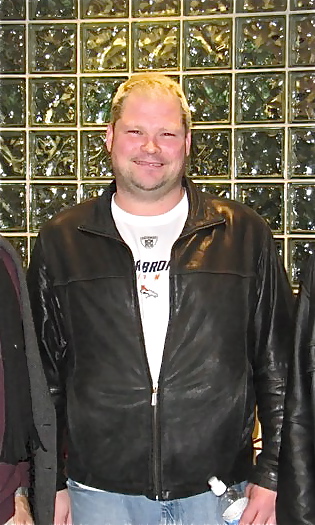
John Wilson (left) and Jim Miller in New Jersey

1/26/2012 – Living with multiple sclerosis has never been easy for John Ray Wilson. It will get even tougher tomorrow when he goes to jail. Like thousands of MS patients around the country John found that marijuana helped relieve his condition. But without healthcare and unable to afford medical quality cannabis on the streets Wilson grew seventeen marijuana plants behind his Franklin Township home in 2008.

Every resource in the State of New Jersey has been thrown at John from helicopters to aggressive prosecutors. This week the NJ Supreme Court refused to hear his final appeal. So at 8:30AM on 1/27  John will surrender himself at the Somerset County Courthouse to serve the remainder of his 5-year prison sentence.

This afternoon John was at home with his family, putting his affairs in order and preparing for a dinner out with friends. He was convicted just before the New Jersey medical marijuana law was passed in 2010.

“I’ve almost given up hope. I mean it’s been 2 years and there’s no patients even registered yet,” Wilson lamented.

The medical marijuana program, administered by the Department of Health and Senior Services (DHSS), has struggled under heavy regulations.

“When I do finally get out,” Wilson asks, allowing only the smallest hope in his voice, “can I have my medicine?”

Not only is the NJ marijuana program still on paper but those in prison cannot access the state-legal medicinal cannabis at all. Those on probation or parole may have a difficult time as well. Drug testing is often standard practice. Qualifying residents, even those with conditions like AIDS or MS, might still get into trouble for being a registered medical marijuana patient and testing positive for THC.

“John Ray Wilson exemplifies the fact the NJ has some of the most retroactive, ill-advised draconian marijuana laws in the country,” said civil rights attorney William Buckman who represented Wilson in the appeal.

“The notion that taxpayers should pay to lock up a sick man for 5 years is ludicrous and tragic,” said Buckman,”The governor should quickly commute his sentence.”

Governor Chris Christie could intervene. State Senator Raymond Lesniak issued a press release yesterday also renewing that call:

“I am disappointed by the recent decision of the Supreme Court to deny the appeal of John Ray Wilson. Mr. Wilson was not selling drugs on our streets. He was merely trying to alleviate the symptoms of a dreadfully painful and regressive disease. It is unconscionable that this Friday he will be behind bars.

“Three years ago, I called on Governor Corzine to commute the sentence of Mr. Wilson. After inaction with the last governor, I was hopeful Governor Christie would better understand the unfair reality of this situation. Unfortunately, Governor Christie has been just like Governor Corzine, refusing to use his and only his power to make things right when the true intentions of the law were misapplied.”

Wilson’s family, fellow patients and medical marijuana advocates plan to rally at the Somerset County Courthouse as John arrives on Friday morning.

The Coalition for Medical Marijuana New Jersey (CMMNJ) has been keeping up demonstrations in support of John since his original trial. The group plans to hold solidarity events for Wilson while he is in prison.

John Wilson’s case has symbolized the ongoing plight of New Jersey’s medical cannabis patients.

CMMNJ – http://www.cmmnj.org

Support John Ray Wilson on Facebook – https://www.facebook.com/pages/Support-John-Ray-Wilson-New-Jersey-MS-Patient/104540271138

CALL or TWEET to Governor Chris Christie 609-292-6000 or @GovChristie – ask him to “Pardon medical marijuana patient John Ray Wilson!”

Chris Goldstein is a respected marijuana reform advocate. As a writer and radio broadcaster he has been covering cannabis news for over a decade. Questions?  [email protected]


NJ Legislators Support New Marijuana Decrim Bill

Sensible New Jersey logo by Garret Overstreet Web Design and Heather Kumer

6/29/2011 – The Garden State is joining the national discussion about changing marijuana laws. A bi-partisan bill to remove criminal penalties for adults in possession of a small amount of cannabis was introduced today in Trenton with strong initial support. A4252 “Decriminalizes possession of 15 grams or less of marijuana.” The bill has seventeen sponsors led by Assemblymen Reed Gusciora (D-25) and Michael Patrick Carroll (R-15).

New Jersey performs more arrests for marijuana than for all other drugs combined. In 2009 (the most recent data) 22, 439 people were arrested for possessing less than 50 grams of cannabis. Currently, adults caught with anything from a joint to two-ounces are treated the same way, with a custodial arrest and a criminal prosecution.

The language of the bill will be available soon on the Legislature’s website: http://www.njleg.state.nj.us/. Right now the only information online is the impressive list of initial sponsors.

Gusciora, Reed as Primary sponsor

Carroll, Michael Patrick as Primary Sponsor

Vandervalk, Charlotte as Co-Sponsor

Vainieri Huttle, Valerie as Co-Sponsor

Coutinho, Albert as Co-Sponsor

Tucker, Cleopatra G. as Co-Sponsor

Caputo, Ralph R. as Co-Sponsor

Ryan, Kevin J. as Co-Sponsor

O’Scanlon, Declan J., Jr. as Co-Sponsor

Diegnan, Patrick J., Jr. as Co-Sponsor

Stender, Linda as Co-Sponsor

Lampitt, Pamela R. as Co-Sponsor

Johnson, Gordon M. as Co-Sponsor

Jasey, Mila M. as Co-Sponsor

Rumpf, Brian E. as Co-Sponsor

Coughlin, Craig J. as Co-Sponsor

Casagrande, Caroline as Co-Sponsor

“We are excited to begin this conversation in the Legislature and will continue to lay the foundation for this groundbreaking effort to cut costs and end the failed practice of criminalizing otherwise productive members of society for possessing a substance that is less dangerous than alcohol,” stated Victor Pinho, a Sensible New Jersey coordinator and NJ Chapter Coordinator for SSDP.

Check back soon at freedomisgreen.com for updates on this emerging topic.

Chris Goldstein is a respected marijuana reform advocate. As a writer and radio broadcaster he has been covering cannabis news for over a decade. Questions?  [email protected]


New Hampshire Tables Medical Marijuana Bill

NH Legislators consider HB 442 in April

5/11/2011 UPDATE The New Hampshire Senate has postponed legislative action on the medical marijuana bill, HB 442. The move today means that the bill may not get a floor vote in the Senate, even though the House passed the measure 221-94 in March.

The sticking point seems to be the years-long fight between Governor John Lynch and the NH Legislature over this issue. Lynch vetoed a medical marijuana bill in 2009 and promised to do the same this year if the bill passed again.

Activists who were in attendance at the New Hampshire legislative session today were disappointed that the Senate didn’t stand up to Lynch. An attempt to overturn the medical marijuana veto in 2009  fell heartbreakingly short by just two votes. Patient advocates on the ground felt that the Legislature should hold firm in the face of Lynch’s threat and try again to force the bill through.

Kirk McNeill at NH Compassion pulled no punches in his reaction to the Senate’s vote, “Today the NH Senate participated in an act of legislative cowardice by tabling HB442.”

But postponing the legislation did not quite kill it. A spokesperson at NH Senator Ray White’s office told Freedomisgreen.com that technically HB 442 could be brought for a floor vote again before the legislative session ends in June. However, the prospects for the bill actually making it to the Senate this year remain unclear.

NH Compassion’s McNeill said, “Patients deserve to have their treatment options be a decision between them and their doctors, a decision based on science.  Laws against the medicinal use of cannabis are quiet simply, interference in the doctor patient relationship backed up by men with guns.”

More info at http://nhcompassion.org/

Questions?  [email protected]

Chris Goldstein is a respected marijuana reform advocate. As a writer and radio broadcaster he has been covering cannabis news for over a decade. He volunteers with local groups to change prohibition laws including PhillyNORML and The Coalition for Medical Marijuana New Jersey.

New Jersey MS Patient Sent to Prison over Medical Marijuana

John Ray Wilson in 2010

8/24/2011 – John Ray Wilson was taken into custody today at the Somerset County Courthouse. He will begin serving a 5-year prison sentence. The 38-year-old MS patient was found with seventeen cannabis plants in 2008.  After serving five weeks in prison in 2010, Wilson was allowed to remain with his family pending an appeal. The NJ Appellate Division upheld his conviction and sentence in late July. Wilson appeared before Superior Court Judge Angela Borkowski in a hearing today to consider a continuation of his bail.

Judge Borkowski ruled that her court was not an appropriate jurisdiction to deviate from the trial decision and appellate court affirmation. Any bail appeal should be made to the Appellate Division. Wilson’s attorney, William Buckman of Moorestown, said that he will file for bail immediately.

During the brief hearing the prosecutor, Deputy Attorney General Russell Curley, argued that Wilson should begin serving his sentence today. The judge agreed. John was taken into custody in the courtroom and is currently being held at the Somerset County jail.

“We think that the appellate decision is misguided,” said Wilson’s attorney William Buckman, “we are hoping that the Supreme Court will set the record straight that New Jersey doesn’t want to put sick people or simple individual marijuana users into prison at the cost of $35,000 a year.”

Buckman has filed a notice of petition to the Supreme Court to appeal the “manufacturing” conviction. The Appellate Division ruled that there was no consideration that the cannabis plants were only for Wilson’s “personal” use.

Ken Wolski, executive director of the Coalition for Medical Marijuana New Jersey (CMMNJ) was in the courtroom today.

“CMMNJ is still hopeful there is a chance for justice in the state Supreme Court. But we are very disappointed that John is back in jail.”

Chris Goldstein is a respected marijuana reform advocate. As a writer and radio broadcaster he has been covering cannabis news for over a decade. Questions?  [email protected]


New Human Research on CBD, Endocannabinoids and Depression

ICRS logo

8/8/2011 – The International Cannabinoid Research Society (ICRS) meeting  in Chicago last month showcased new data on cannabinoids gathered from human subjects. Most bio-medical science happens on rats or in petri dishes, so any studies on people are always notable. The ICRS is a unique and concentrated pool of cannabinoid scientists presenting the latest breakthroughs at our annual meetings.

The second day of the 2011 ICRS meeting had a Psychiatric Session that included these interesting topics:

Danieal Hauer, Ludwig-Maimilians University (Germany) discussed results from human subject who had undergone cardiac surgery.  23.5% percent of patients were thought to have diagnosable symptoms of depression after 6 months post-surgery.  This population of depressed patients had lower blood levels of Anandamide, an endocannabinoid. The doctors suggest that patients with lower endocannabinoid levels during the peri-opertaive stage are at a higher risk of developing depression.

Mateus Bergamaschi, University Sao Paulo Brazil, showed results from a human study on the effects of pure CBD to treat people with social phobia.  Participants were all healthy college undergraduates. They divided into different groups and were given 2 minutes to prepare a 4 minute oral presentation on “the public transportation system of your city.” The participants who received an oral of CBD had lower anxiety scores than the placebo group. The researchers conclude that this is another study which demonstrates the anti-anxiety effects of CBD and additional double blind, placebo controlled studies are needed.

Andrea Dlugos (University of Muenster, University of Chicago) presented the first data on human subjects which indicates that stress can increase the levels of many endocannabinoids. Acute stress increases N-Acylethanolamines, i.e., AEA, in healthy humans. Basla serum levels of AG and AEA were found to be lower in depressed women. Functional FAAH gene variants influence response to acute stress. eCB increases are correlated to circulating levels of stress indicators.  Stress increases AEA, PEA, OEA but not 2AG, 2OG. Psychosocial specific stress increases some levels. Interestingly, Caucasians show an increase in certain cannabinoids that was not seen in African Americans and Asians.  The authors note that cortisol and PEA share a common mechanism that warrants further study.

These three sets of research could have beneficial applications if they are developed. Testing the endocannabinoid levels to help identify those at risk for depression after heart surgery would be a simple way of averting this negative outcome. It is also exciting to see pure CBD used in a psychological experiment with humans demonstrating a promising treatment from an easily acquired extract.

The ICRS meeting was jam packed with amazing new science. We’ll have more from the presentations in future posts.

Jahan Marcu is currently investigating the pharmacology of cannabinoid receptors. He was working at the California Pacific Medical Center Research Institute when exciting discoveries were made showing enhanced anti-cancer effects with THC and CBD from the Cannabis plant. The findings were published in the Journal of Molecular Cancer Therapeutics. In 2009 he received the Billy Martin Award from the International Cannabinoid Research Society (ICRS). Jahan is currently the vice-chair the Medical and Scientific Advisory Board at Americans for Safe Access (ASA). Questions?   Contact    [email protected]

DISCLAIMER: The views and opinions expressed are those of the author and do not necessarily represent any University, business or affiliates. While the information provided in this blog is from published scientific studies it is not intended to diagnose or treat any disease.

New Jersey: 109 Doctors Register for Medical Marijuana

1/11/2012 – A spokesperson at the New Jersey Department of Health and Senior Services (DHSS), Donna Leusner, said that there are one hundred and nine physicians registered with the state’s medicinal marijuana program.  This is an increase of just nineteen since the last check on the list in June 2011.

The Garden State is requiring the nation’s first registry for doctors who wish to recommend cannabis therapy. The separate registry for seriously ill patients is not open yet. Qualifying NJ patients do not have any protection from arrest or prosecution if they are caught with marijuana.

The finalized regulations for the “Medicinal Marijuana Program” were released by NJDHSS in December 2011. The doctor registry was not written into the law, but it is part of these new regulations. Patients, scientists, doctors, nurses and medical professionals testified several times before Legislative and DHSS hearings that the registry was unnecessary and contained requirements that would discourage participation.

Ken Wolski, a registered nurse and Executive Director of The Coalition  for Medical Marijuana New Jersey (CMMNJ) wrote about the chilling effect of the registry.

” The physician registration program is even more limiting. A new requirement says that physicians must certify that they have completed medical education in Addiction Medicine and Pain Management within the past two years. Physicians must include the course title that covers these two areas, or they will be rejected from the registry.

This is a curious add-on. Marijuana is approximately as addictive as caffeine. Physicians should not be required to take a course in addiction medicine for recommending a substance with documented low addiction potential.” read full

The former DHSS Commissioner Dr. Poonam Alaigh testified before the NJ Senate Health Committee in March 2011 that no similar requirements existed for doctors dispensing other drugs, even narcotics like morphine.

There are more than 28,000 physicians in New Jersey. The low number of registered doctors participating in the cannabis registry so far is seen as a problem by advocates and patients. The NJ Board of Medical Examiners, The NJ Department of Consumer Affairs and DHSS are tasked with providing information to doctors about the cannabis program.

The physician registry for medical cannabis began in October 2010. The list of the registered doctors is currently not public, leaving many patients wondering how they will access the program when or if it becomes operational. DHSS spokesperson Donna Leusner said that the possibility of publishing the doctor list is “under review.”

Two years after the Compassionate Use Medical Marijuana Act was signed into law, the controversial physician registry is the only part of the NJ program that appears to be online.

None of the six Alternative Treatment Centers (ATCs) that will grow and dispense the cannabis have received their final permits from the state. Several have recently failed in their bids for municipal land-use variances. This means that there is no legal marijuana available in New Jersey.

The severely restrictive regulations have put qualifying residents in a Catch-22: Until one of the ATCs actually opens their doors the specially qualified doctors will not be able to register patients with the state.

Chris Goldstein is a respected marijuana reform advocate. As a writer and radio broadcaster he has been covering cannabis news for over a decade. Questions?  [email protected]

New Jersey Attorney General Meets With Medical Marijuana Advocates

NJ State House by Freitag

New Jersey State House by C. David Freitag

Editor Chris Goldstein was quoted in this press release today –

FOR IMMEDIATE RELEASE 5/25/2011
The Coalition for Medical Marijuana New Jersey (CMMNJ)
www.cmmnj.org

New Jersey Attorney General Meets With Medical Marijuana Advocates

Trenton – New Jersey Attorney General Paula Dow sat down with the Coalition for Medical Marijuana NJ (CMMNJ) on May 24th at her office in Trenton.  The AG and her staff held the meeting to hear concerns from local advocates about the compassionate use marijuana program that has now been suspended by Governor Christie.

Ken Wolski RN, the executive director of CMMNJ, was grateful for the interaction.

“Attorney General Paula Dow and First Assistant Phillip Kwon took time out their demanding schedules to listen to some very serious issues for New Jersey’s medical marijuana law,” said Wolski, “Qualifying patients continue to wait for this program and we hope that some of their concerns were heard. The Office of the Attorney General plays a key role in the implementation and administration of the compassionate use law.”

On April 22, 2011 Dow sent a letter to the Department of Justice in Washington DC requesting clarification about the medical marijuana law. Several US Attorneys have recently issued letters in other states with a clear description of how federal authorities will prosecute medical marijuana facilities, even if they are permitted under state law. In Washington, Montana and other states the letters were accompanied by DEA raids of local medical cannabis dispensaries.

NJ Attorney General Paula Dow stated in the meeting that she sent a follow-up letter to the US Department of Justice, addressed to US Attorney General Eric Holder, on May 23, 2011.

Paul Fishman, the US Attorney for New Jersey, has not sent any communication regarding the NJ medical marijuana law before or after Dow’s requests. A spokesperson at the US DOJ said the April 22nd letter from New Jersey had been received and was under review.

Chris Goldstein, the media coordinator at CMMNJ also attended the meeting.

“Not a single person in New Jersey has been able to register for medical cannabis, despite many promises from Governor Christie,” said Goldstein, “But I think that we had a meaningful exchange of new ideas with Attorney General Dow. The intent of The Compassionate Use Medical Marijuana Act is to grant legal access to seriously ill residents. There are some methods that the AG’s office can explore to actively protect New Jersey’s medical cannabis patients today.”

New Jersey passed the first compassionate use law in the country that forces patients into a centralized system of just six Alternative Treatment Centers to access all of their state-legal cannabis. There are no provisions in the NJ law to allow patients or caregivers to cultivate cannabis on their own. The law was supposed to have been fully implemented in the summer of 2010 but has suffered numerous delays.

CMMNJ’s Ken Wolski is looking forward to meeting with the one state official who has exercised the most influence over the medical marijuana law: Governor Chris Christie.

“It is long past time for Governor Christie to actually meet with patients and advocates in our state to discuss the compassionate use law.”

New Jersey: Camden Will Consider Medical Marijuana Centers at Land-Use Hearing

2/6/2012 – A zoning hearing will be held before the Land-Use Board of Camden New Jersey on Monday February 6, 2012. These are normally rather dull meetings but on the agenda this week is a variance to allow one of the six state-approved medical marijuana Alternative Treatment Centers (ATCs). Several municipalities around the state have already turned down the facilities. This has left the Garden State medical cannabis law completely stalled as none of the ATCs can find a home.

But in Camden there are some new factors to the attempt that could yield a different outcome. Instead of one of the multi-million dollar ATCs seeking permission this time it is an individual going before the local zoning board.  Frank Fulbrook has owned property in Camden since the 1960’s. He is also a local activist and a meticulous scholar. This writer interviewed Fulbrook in 2007 after he mapped all of the open-air drug markets in Camden – a rather large and risky task.

Fulbrook is considered an expert in the local planning code; he actually sat on Camden’s Land-Use Board for many years. Now Fulbrook has partnered up with a friend who owns a warehouse, they will seek the zoning approval on their own and then lease the space to one of the ATCs. Rather than coming in from outside the community asking to open such an innovative business Fulbrook and his partner are super-locals, which should give them a much better shot.

Even with all of these ducks in a row there are other factors. If you have never been to New Jersey you have still probably heard of Camden. The city sits across the Delaware River from Philadelphia and remains a sore spot in the state. Yes there are happy seals barking from the gleaming NJ Aquarium, a bustling Rutgers Campus and some strips of success. But recent budget cuts have escalated the violence and blight across 95% of the already impoverished community.

Governor Chris Christie and the NJ Department of Health and Senior Services (DHSS) have severely altered the plans for the cannabis program. Among the buffet of new restrictions was the elimination of the provisions that allowed for the home delivery of  NJ’s medicinal cannabis. This means that patients or their designated caregiver must visit the ATCs in person. Although Camden is centrally located and has ample connections to public transportation, seriously ill NJ residents may not want to venture into the dangerous city for their legal marijuana.

Another interesting note is that half of the Camden police force was recently laid off. This has led to a sharp increase in the presence of federal agents – mainly in the Drug Enforcement Administration or DEA. If the ATC is approved in Camden there may be some friction between a warehouse growing marijuana for half of South Jersey’s patients and the DEA.

Still Fulbrook is hopeful for success, “This is a good place for one of these Alternative Treatment Centers. It’s the largest population concentration in South Jersey and all roads lead to Camden. It’s hub of highways and mass transit. But there are people right in Camden that have serious medical problems like HIV/AIDS …there are a lot of people right here who can benefit from marijuana as medicine. And this can create jobs.”

The Coalition for Medical Marijuana New Jersey (CMMNJ) is planning to have advocates at the hearing to testify.

Chris Goldstein is a respected marijuana reform advocate. As a writer and radio broadcaster he has been covering cannabis news for over a decade. Questions?  [email protected]

New Jersey Continues to be the Gardenless State

“I never smoked it before I got sick, and I don’t smoke it for fun,” said Ms. Booker, 59, from Englewood, N.J.

As New Jersey’s Governor Chris Christie continues to stonewall, delay and deny voter-approved medical marijuana legislation, women like Irvina Baker go without alternative treatments to serious illnesses. This New York Times piece is an excellent example of how our elected officials decide how laws will or will not be implemented, based on their own political agenda, and not the will of the people.

Irvina Booker makes a most unlikely criminal. She lives in constant pain, disabled by multiple sclerosis and arthritis, a grandmother whose limited mobility depends on her walker, her daughter and marijuana.

Irvina Booker at her home in Englewood, N.J. She expressed frustration about the lack of access to medical marijuana.

“I never smoked it before I got sick, and I don’t smoke it for fun,” said Ms. Booker, 59, who lives in Englewood, N.J. She would not divulge how she obtains her marijuana, but said, “I don’t want to be sneaking around, afraid someone is going to get arrested getting it for me.”

Like many people who contend that marijuana eases pain and appetite loss from serious diseases, Ms. Booker cheered in January 2010, when New Jersey legalized its use in cases like hers. But a year and a half later, there is still no state-sanctioned marijuana available for patients, and none being grown, and there is no sign of when there might be.

In the last few months, officials in New Jersey, as well as several other states, have said that mixed signals from the Obama administration have left them unsure whether their medical marijuana programs could draw federal prosecution of the people involved, including state employees.

A Justice Department memorandum issued late last month left unanswered questions, and Gov. Chris Christie has not said how he will proceed. But medical marijuana advocates say that in New Jersey, at least, the state law is stringent enough not to run afoul of federal policy, and that the governor’s true goal has been to block the program.

“You don’t have to be Sherlock Holmes to figure that out,” said State Senator Nicholas P. Scutari, a Democrat. “He’s used every tactic he can to delay and deny.”

The governor, a Republican, and his aides have insisted that every delay has been a genuine attempt to make the program work properly.

“In light of the Obama administration’s memorandum, the governor’s office is performing its due diligence to ensure implementation of the program is not in conflict with federal law and does not put state employees charged with directing the program at risk,” Kevin Roberts, a spokesman for Mr. Christie, said.

Read more.

New Jersey Licenses Six Alternative Treatment Centers for Medical Marijuana

Medical marijuana growing in CA – photo by C. Goldstein

On March 21, 2011 New Jersey Department of Health and Senior Services (DHSS) announced the winning applications for the medical marijuana Alternative Treatment Centers (ATCs) in the Garden State. Twenty-one applicants submitted exhaustive business plans along with a $20,000 filing fee.

The non-profit’s are:
· Breakwater Alternative Treatment Center, Corp., Ocean, Central Region; The ATC would be located in Manalapan, Monmouth County.

· Compassionate Care Centers of America Foundation Inc. (CCCAF), Jersey City, Central Region; The ATC would be located in New Brunswick, Middlesex County.

· Compassionate Care Foundation Inc., West Trenton, Southern Region; The ATC would be located in Bellmawr, Camden County.

· Compassionate Sciences, Inc. ATC, Sea Cliff, NY, Southern Region; The location of the ATC is undetermined, but will be located in either Burlington or Camden County.

· Foundation Harmony, Cliffside Park, Northern Region; The ATC would be in Secaucus, Hudson County.

· Greenleaf Compassion Center, Montclair, Northern Region; The ATC would be in Montclair, Essex County.

However the regulations governing the facilities have not been finalized and remain in a hard-fought Legislative dispute.

Ken Wolski the executive director of The Coalition for Medical Marijuana-New Jersey (CMMNJ) said,

“We certainly wish the successful applicants luck because patients need legal marijuana as soon as possible.   However, we have serious doubts that these non-profit organizations will be able to develop a working program with the overly restrictive regulations proposed by DHSS.  CMMNJ still supports the legislative Resolution to invalidate significant parts of the DHSS regulations.”

Read the full press release from NJ DHSS here: http://www.state.nj.us/cgi-bin/dhss/njnewsline/view_article.pl?id=3681