New Jersey Marijuana Center Applications Made Public

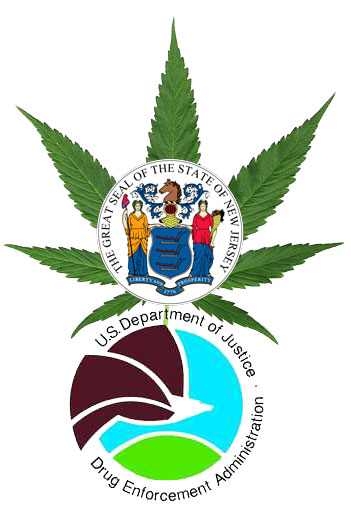
4/13/2011 – Documents from the application process in New Jersey for the medical marijuana Alternative Treatment Centers are being released. The Coalition for Medical Marijuana New Jersey (CMMNJ) and Freedomisgreen.com acquired the six applications that were approved.They are posted online for public download here: http://www.scribd.com/NJcannabisDocs

Requests for the information were filed through the Open Public Records Act (OPRA) with the Department of Health and Senior Services (DHSS).

DHSS officials said that the scoring and review documents from the application process are being released later today. The additional twenty-five unapproved applications are expected later this week.

CMMNJ and Freedomisgreen.com will continue to post the documents online for public review.

New Jersey: Medical Marijuana Operators Expect Announcement

Officials may announce the winning applications for the medical marijuana Alternative Treatment Centers  (ATCs) in the Garden State today. The New Jersey Department of Health and Senior Services (DHSS) confirmed in an email that they would release a statement.

More than 20 applicants submitted exhaustive business plans along with a $20,000 filing fee. But the regulations governing the ATC facilities have not been finalized and remain in a Legislative dispute. Potential non-profits have stated that they would find it nearly impossible to operate under the current proposed rules, even if the state does give them a green light.

Read more: NJ Health Commissioner treats medical marijuana patient

New Jersey Medical Marijuana Patient Released

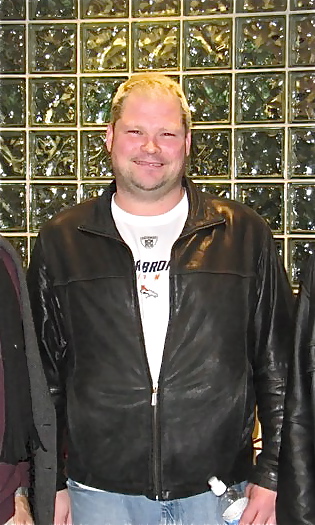
John Ray Wilson in 2010

10/6/2011 – John Ray Wilson has been granted bail by the New Jersey Appellate Division pending his final appeal to the State Supreme Court. Although the New Jersey Deputy Attorney General Russell Curley requested $150,000 cash, the judge set $15,000 and allowed a posting of 10 percent.

His family moved quickly to secure Wilson’s release. In a phone call this week John said he was glad to be home, “My grandma needs a lot of help right now, so at least I can be there for her.”

In January 2010, just as the NJ medical marijuana law was passed, Wilson was convicted of growing 17 cannabis plants. Wilson lives with multiple sclerosis and without health insurance. He has always maintained that the marijuana was cultivated for his personal medical use.

This is the second time that Wilson has been incarcerated and bonded out as his case continues through the courts.

MS is one of the few recognized medical conditions under the New Jersey Compassionate Use Medical Marijuana Act. Cannabis treats muscle spasticity in MS patients and been shown to slow the progression of the disease.

New Jersey’s medical marijuana program remains in trouble. Delays and added restrictions imposed by Governor Chris Christie have kept state-sanctioned cannabis from being grown or distributed. Patients with qualifying conditions have only the illegal, underground market for access.

Wilson may not use cannabis while on bail and has gone back to using bee-sting therapy.

The NJ Appellate Division ruled that “manufacturing” marijuana can never be considered for personal use (medical or otherwise).

Legal observers note that granting bail may hint that the state’s highest court may take up the case.

“We think that the appellate decision is misguided,” said Wilson’s attorney William Buckman, “we are hoping that the Supreme Court will set the record straight that New Jersey doesn’t want to put sick people or simple individual marijuana users into prison at the cost of $35,000 a year.”

Motivated Stoners…and How you Can be One Too!

Pot smokers have endured their fair share of negative publicity. The 1930’s movie Reefer Madness highlighted pot smokers who simply went bonkers from smoking a joint; jumping out of windows, beating each other to death and laughing maniacally (the last part may still hold some truth).

Decades later, pot smoking became personified by Sean Penn’s “Spicoli” in Fast Times at Ridgemont High.

Damn, that one hurt. For a number of reasons:

1.   The public at large began to think of all pot smokers as Spicoli: brain-fried, dopey and irresponsible.

2.   Sean Penn morphed into a pompous jerk after this role, as if the funny were just smoked right out of him. (Give that man some Spicoli back, damnit!)

But times have changed. Over 40% of the U.S. population has admitted to smoking marijuana. Pot smokers aren’t falling out of vans in a cloud of smoke; they’re running multi-million dollar companies, winning Olympic medals, making movies and writing best-selling novels.

Here are just a few successful and motivated stoners:

  • Stephen King, best-selling author
  • Anita Roddick, British businesswoman, human rights activist and environmental campaigner
  • Michael Phelps, Olympic Gold-medalist
  • Rick Steves, Author and historian
  • Richard Branson, British entrepreneur
  • Montel Williams, television host, MS spokesperson
  • Jodie Emery, executive director of Cannabis Culture
  • Carl Sagan, astronomer and author
  • Anita Thompson, best-selling author
  • Ayn Rand, Novelist, philosopher and playwright
  • Oliver Sachs, British neurologist and author
  • Ted Turner, American media mogul
  • Missy Suicide, founder of Suicide Girls, alternative pin-up site.

So how can you be a more motivated stoner?

Here are a few pointers:

1.   Smoke and Do. Initiate a project after a smoke session. It’s surprising how much you can accomplish. Whether it’s a spring-cleaning or a car repair or a complex splinter removal, smoking pot can free up your mind and help you focus.

2.   Smoke and Move. Physical exercise after getting high is naturally pleasurable. Get outside, breathe in the air, don’t be afraid to care. Fire up the iPod. Go for a bike ride. Run. Dance. Stretch. Have a real-life, aerobic surround-a-sound experience.

3.   Smoke and Sit. Meditating and marijuana smoking go together like peanut butter and that weird marshmallow shit they used to put on our sandwiches way back when.

4.   Smoke and Storm. Feeling at crossroads? Smoke a little weed and brainstorm. Grab a big pad of paper and a black Sharpie. Allow your mind to wander and then write drawn or draw out possible solutions. Weed allows for more fantastical ideas to arise; ones that can easily translate into “real life” if necessary.

5. Smoke and Stay. To be truly motivated, one must be relaxed and ready. For some, smoking weed allows them mental downtime and deep relaxation, which ultimately translates into a well-rested individual, capable of executing the tasks at hand.

6. Smoke and Smile. Nothing can get in the way of a motivated life like anger. Or grief. Or guilt. Marijuana can offer the perspective needed to look at your psychological well-being and make improvements, without being so emotionally enmeshed. Simply the act of laughing is therapeutic, which weed more than happily supplies.

We’ve entered a new era; one in which pot smoking is becoming increasingly accepted, and occasionally extolled for its virtues. And while weed is not going to find you a new job or get you out of your deadbeat relationship, it can be used as a tool for change. Why not?

Or…you could embrace your inner Spicoli and enjoy the blissful state of doing nothing. After all, doing stuff is a little overrated anyway.

All I need are some tasty waves, a cool buzz, and I’m fine. – Jeff Spicoli

Writer of article embracing her inner Spicoli


Beth Mann is a popular blogger and writer for Open Salon and Salon. She is also an accomplished actor and director with over 15 years of experience, as well as the president of Hot Buttered Media. She currently resides at the Jersey shore where she can often be seen surfing or singing karaoke at the local dive bar. Contact maryjane { at } freedomisgreen.com  

New Jersey medical marijuana patients offer powerful testimony

Medical marijuana press conference in Trenton, NJ

The New Jersey state Senate Health, Human Services and Senior Citizens Services Committee held a public hearing on January 20, 2011 on resolution SCR 130. This is part of a constitutional process to rescind and re-write overly restrictive rules for the medical marijuana program.

Maryland: Medical Marijuana and Decrim Bills Update

UPDATE from Americans for Safe Access:

“The Maryland State Senate voted 41-6 to pass a bill today that would give an affirmative defense to qualified patients who are arrested and prosecuted for possessing or growing medical marijuana. Senate Bill 308 amends the 2003 Darrel Putnam Compassionate Use Act, which already allows for a “medical necessity” defense but still results in a misdemeanor conviction and a $100 fine. The new Senate legislation would keep patients with “clear and convincing evidence” from being convicted and from sustaining a punitive fine.

SB 308 was amended earlier this month when its House companion bill stalled in committee due to opposition from the new administration’s Department of Health and Mental Hygiene (DHMH). Both houses of the state legislature were prepared to pass a comprehensive bill this year that would have protected patients from arrest and prosecution altogether, and would have established a state-run production and distribution system. However, the new DHMH Director estimated the cost of such a program at more than $7 million over a 5-year period, despite a fiscal impact assessment of less than 1/10th of that amount for an almost identical bill debated last year. Advocates called this year’s fiscal impact extremely inflated, based on an inaccurate needs assessment.

“Rather than endure another failed attempt to pass meaningful medical marijuana policy in Maryland, patients have instead decided to support this stopgap measure,” said Caren Woodson, Government Affairs Director with Americans for Safe Access (ASA), the country’s largest medical marijuana advocacy group. “It’s not ideal, but the bill will help patients avoid what is now a guaranteed conviction if arrested.” ASA worked with State Senator Jamie Raskin (D-Montgomery County) to craft the amended version of SB 308, which also includes language to study the elements of a comprehensive policy change with the aim of passing such legislation next year.

SB 308 will now proceed to the House of Delegates for a floor vote and, if passed, will then go to Governor O’Malley for signature. Patient advocates have vowed to pass more comprehensive legislation next year by working with DHMH and the legislature to design a policy that not only protects patients from arrest and prosecution, but also establishes a system of licensed cultivation and distribution.”

Further information:
Text of SB 308: http://AmericansForSafeAccess.org/downloads/Maryland_SB308_Amended.pdf

Maryland is moving on bills that would legalize medical marijuana for ill residents and decriminalize possession for all adults. Both had committee hearings scheduled on March 3.

HB 291/ SB 308, the medical cannabis legislation is sponsored by Dan Morhaim, the only licensed physician in the MD Assembly.

But in a battle of the doctors current Secretary of Maryland’s Department of Health and Mental Hygiene (DHMH), Dr. Joshua M. Sharfstein,  voiced concerns over using cannabis as medicine.

“This is not just because marijuana is a controlled substance. It is also because marijuana, unlike approved pharmaceuticals, has not been characterized, studied, and determined by the U.S. Food and Drug Administration to be safe and effective.”

In late February, the Maryland General Assembly also held a hearing for a bill to decriminalize the personal possession of small amounts of cannabis by adults.

HB 606 would reduce punishment for  small amount of pot to a civil citation and a nominal fine. Currently Maryland prosecutes possession of any amount as a criminal misdemeanor.

Phillip Strause, a marijuana activist local to Maryland and Virginia had this to say about HB291,

“The Department of Health and Mental Hygiene requested to work with Delegate Morhaim to ‘craft a better bill.’ The bill is currently not scheduled to be voted on for this reason. I believe political fear drives the system in MD, as few are willing to condone such a shift in policy.”

He added, “HB 606 has been heard in committee but has yet to be voted upon. I feel this is an excellent step in the correct direction but insufficient in fixing the heart of the problem, the perception that cannabis is more dangerous than it actually is.”

Ken Wolski, the Executive Director of the Coalition for Medical Marijuana—New Jersey (CMMNJ) submitted supporting testimony for MD through Americans for Safe Access saying,

“The Maryland bill closely resembles the Compassionate Use Medical Marijuana Act that passed into law in January 2010 in the Garden State. Over one year since the NJ law passed, not a single patient has yet received legal medical marijuana in  state; there is not a single dispensary even close to opening; and not a single, legal, marijuana plant is even growing in this state.

Maryland needs to propose a bill that has at least some chance of actually getting marijuana to qualified patients. A provision for home cultivation is really the only way to guarantee this, as New Jersey’s experience proves.”

Read – Health chiefs in NJ and MD fight marijuana as ‘medicine’

Find out more about the efforts in The Free Statehttp://www.mpp.org/states/maryland/

Diane Fornbacher has been a cannabis law reform activist for 15 years. She has worked with some of the top reform organizations (NORML, Drug Policy Alliance, ASA, The November Coalition). Fornbacher is the current Vice Chair of the NORML Women’s Alliance and serves on the board of The Coalition for Medical Marijuana New Jersey (CMMNJ). When she isn’t working to change the cannabis laws, she enjoys photography and writing/performing poetry.  Contact grassroots {at} freedomisgreen.com

Massachusetts ponders medical marijuana industry

MASSCANN logo http://masscann.org/

Legislation is active in the Bay State to legalize and regulate medical marijuana through 18 distribution centers. A non-binding referendum last year regarding medical cannabis showed overwhelming support among voters.

The sponsoring legislator told the Boston Herald:

“Since the 1930s, we’ve been fighting marijuana as the killer weed, and that has to stop,” said state Rep. Frank I. Smizik, a Brookline Democrat championing the bipartisan bill. “There are so many people suffering with serious diseases where marijuana is the only way to stop the pain and keep them going.” Read full

A lot of new territory is opening up on the East Coast for the medical marijuana industry. Maine, Rhode Island, New Jersey and Washington DC are all currently in the process of approving medical marijuana production and distribution facilities.

Massachusetts made news in 2008 when voters decriminalized minor marijuana possession for adults. Those caught with small amounts of cannabis are currently issued a non-criminal ticket and are not arrested.

More info: http://masscann.org

Media Services

Freedom Is Green Media Group LLC – Growing success!

Professional Services

  • Text copy for campaigns and advertising
  • Creative consulting
  • Social Media coaching
  • Brand awareness
  • Speaking engagements/lectures

Freedomisgreen.com editors are available for media appearances, lectures and after-dinner talks!

Contact Chris Goldstein to discuss your project or event: 267 702 3731 or [email protected]

Medical Cannabis helps ALS patient outlive her own doctors

Medical Cannabis helps ALS patient outlive her own doctors

Last month, Cathy Jordan sat on a panel at the Cannabis Therapeutics Conference in Arizona.  Before taking the stage, she discussed the medical use of cannabis for ALS with Jahan Marcu, the Science Editor at Freedom is Green.

Cathy Jordan first noticed something was wrong in summer of 1985 when she couldn’t pick things up. Her muscles weren’t responding. In 1986, she was diagnosed with ALS (Amyotrophic Lateral Sclerosis). ALS, also known as Lou Gehrig’s disease, is characterized by the death of motor neurons leading to loss of limb control, breathing, swallowing, speech and widespread cellular dysfunction. Most cases of ALS are sporadic; it is not a viral or autoimmune disease.

“Most people start using a feeding tube because they are afraid of choking to death”, says Cathy.

In 1986, she was given 3 – 5 years to live according to her neurologi st. Nearly 3 decades later, she is still alive and living with ALS.

“All my docs are retiring or dead. I’ve outlived 5 support groups and 4 neurologists,” said Cathy. This actually posed a problem for Cathy who lost her social security benefits because she lived passed her expiration date. The state of Florida said her ID and regular documentation wasn’t good enough to prove she was alive and to continue to receive benefits. She had to ask her neurologist to fill out paperwork to prove she was still alive.

Mrs. Jordan began using Cannabis from a Florida grower to treat her ALS in the late 80’s. “Donny Clark provided my medicine, grown in the Myakka River Valley…he was busted and sentenced to life in prison, and that strain of Cannabis was lost.

“You know, they say the fountain of youth is in Florida. Maybe it was something in the soil that made this plant helps me…and I don’t understand why doctors wouldn’t study me. But I still would like to know why this is helping me.”

At first, doctors wouldn’t accept Cathy’s that marijuana could be responsible for her extended life span. Other doctors thought that smoking anything would impair her lung function and even threatened to have this paralyzed women committed, simply based on the fact that she thought Cannabis was actually helping her.

“I visited a neurologist at Duke University. When I told him that I was smoking Cannabis, he didn’t know what to do with me. He was afraid. He wouldn’t even take my blood pressure because I was using an illegal drug.”

Cathy adds:

“I asked my docs if they would take a drug if it was neuroprotective, an antioxidant and an anti-inflammatory. They say ‘yes’ and ask me if I know of one. Cannabis, I tell them.”

Nearly three decades later, the science has caught up with this miracle patient. Scientists created a mouse with ALS, which was very exciting for Cathy. Research has shown that THC and other cannabinoids can benefit mice with ALS. The mounting evidence of cannabinoids halting the progression of ALS has started to change the attitudes of doctors and prominent researchers have recently called for ALS clinical trials with Cannabis or cannabinoids.

“They all agree today that I should smoke Cannabis,” says Cathy. Twenty six years later, my original neurologist fought [successfully] to make sure Cannabis is legal for patients in Delaware.”

Researchers think Cannabis may help ALS patients relieving pain, spasticity, drooling, appetite loss and has minimal drug-drug interactions and toxicity.

“There are ALS patients associations that fight for the right of patients to die with dignity. But what about my right to life?” asks Cathy. “Keeping my medicine illegal removes my right to life.”

Video: Tucson AZ – The Use of Cannabis for ALS – Jahan Marcu & Cathy Jordan

Jahan Marcu is currently investigating the pharmacology of cannabinoid receptors. He was working at the California Pacific Medical Center Research Institute when exciting discoveries were made showing enhanced anti-cancer effects with THC and CBD from the Cannabis plant. The findings were published in the Journal of Molecular Cancer Therapeutics. In 2009 he received the Billy Martin Award from the International Cannabinoid Research Society (ICRS). Jahan is currently the vice-chair the Medical and Scientific Advisory Board at Americans for Safe Access (ASA). Questions?   Contact   [email protected]
DISCLAIMER: The views and opinions expressed are those of the author and do not necessarily represent any University, business or affiliates. While the information provided in this blog is from published scientific studies it is not intended to diagnose or treat any disease.

Medical Marijuana Activists Set to Destroy DEA Ruling

2/16/2012 – Activists are preparing to gather at the Federal building in Trenton today to destroy a Drug Enforcement Administration (DEA) ruling as part of a national medical marijuana protest. Members of NORML-NJ and The Coalition for Medical Marijuana New Jersey will shred a copy of The Federal Register Vol. 76 No.131 dated July 8, 2011. The document contains the DEA’s most recent denial of a petition to reschedule marijuana.

Thursday’s protest is organized by Americans for Safe Access and is taking place in cities across the country. Portland, Maine is another East Coast city participating in the “Rally for Safe Access.”

The Schedule I status under the federal Controlled Substances Act of 1970 is the reason that marijuana is prohibited. Schedule I drugs are described as having “no currently accepted medical use in treatment in the United States;” and lack “accepted safety for use under medical supervision;” and, have “a high potential for abuse.”

In the past 40 years voluminous criminal code has since been created at the federal and state level to enforce the Schedule I prohibition of cannabis. Suffering the worst part of this continued effort are seriously ill Americans. They live in fear of losing their lives not just to their disease, but to prison because they find relief from a medication that remains illegal.

Advocacy groups including NORML and MAPS petitioned the DEA for many years seeking to move cannabis to another schedule. The most recent denial last summer culminated a process that the DEA under several presidents, obfuscated for more than a decade.

There are two important factors in the re-scheduling debate. The first is a 1972 report entitled “Marijuana, A Signal of Misunderstanding.” Commissioned by President Nixon and Congress it was crafted by former Pennsylvania Governor Raymond Shafer who lead a group that spent almost two years on the issue. Their final recommendation was that cannabis should not be regulated under the CSA or prohibited with criminal laws.

“The actual and potential harm of use of the drug is not great enough to justify intrusion by the criminal law into private behavior, a step which our society takes only ‘with the greatest reluctance.”

The second important factor is a ruling from an Administrative Law Judge within the DEA. In 1986 Francis L. Young said that “Marijuana is one of “one of the safest therapeutically active substances known to man. (T)he provisions of the (Controlled Substances) Act permit and require the transfer of marijuana from Schedule I to Schedule II.”

In ’72 and again in ’86 the Executive Branch tossed aside serious and well-thought recommendations about cannabis policy. Instead of considering solid information millions of Americans have been arrested, trillions of tax dollars spent and untold lives lost or ruined.

Modern science that investigates the natural plant and its component cannabinoids continues to re-verify the tremendous medical benefits of cannabis. The reality is that marijuana is used as a medicine every day by millions of seriously ill Americans – legal or not. That’s why medical marijuana activists say the DEA ruling is good for nothing but shredding and recycling.

More on the ASA rally locations: http://americansforsafeaccess.org/article.php?id=7062

More the CMMNJ Trenton action: http://cmmnj.blogspot.com

Chris Goldstein is a respected marijuana reform advocate. As a writer and radio broadcaster he has been covering cannabis news for over a decade. Questions?  [email protected]