New Jersey: Montel Williams and Teaching Hospitals Applied to Grow Medical Marijuana

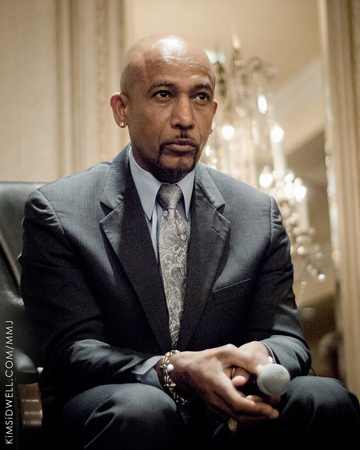
Montel Williams at the 2011 NORML Conference in Denver – pic by kimsidwell.com

8/5/2011 – There was tough competition in New Jersey to run the first six Alternative Treatment Centers for medical marijuana. Freedomisgreen has now obtained all of the applications through Open Public Records Act requests. The process was the most expensive in the nation. High-rollers were willing to bet $20,000 on each submission.

The winners were announced in March 2011 and their applications were released soon after. But there was little information on the groups who did not make the cut, until now.

Television host Montel Williams applied for a center in North Jersey based out of Somerset.  Williams has since invested on the West Coast and owns a dispensary in Sacramento, CA.

The New Jersey Council of Teaching Hospitals offered a plan that would incorporate fingerprint ID lockboxes and engage some of the state’s top-dollar medical institutions.  They would have used their existing network of doctors and an impressive list of grant funding contacts.

The big names weren’t the only ones looking to spend some significant coin to get into the non-profit marijuana business.

The Farmacy Inc. was a group of South Jersey pharmacists who work mainly at local CVS branches. But their big contact was Ryan Barna, who appears instrumental to their application. Barna is an active board member at the American Pharmacist Association and the NJ Pharmacists Association, two of the more powerful drug distribution lobbying groups…well, ever.

The Institute for Health Research was a group of vitamin enthusiasts and holistic medicine practitioners. They planned to operate from the Abunda Life Center in Asbury Park, a rather well-known entity in the local area.

Some of the NJ applicants looked outside the state for experience. A group of investment bankers, gaming professionals and finance specialists teamed up with a cannabis entrepreneur in Colorado. The NJ Relief Initiative Inc had Oleg Rutman on the board and boasts that he started the largest patient collective in CO. Garden State Medical Marijuana Associates retained expert consultants including Steve D’Angelo the owner of Harborside Health Services and the new reality star of Discovery Network’s “Weed Wars.”

Here are the organization names, name of the executive director and the proposed location(s). Some of these groups won an ATC contract with separate submissions.

Abatin Wellness Center- Montel Williams – Northern NJ, Somerset

Grow Well – Bonnie Johnson – Southern NJ, Egg Harbor

Institute of Health Research – Ralph Fucetola – Central NJ, Asbury Park

New Jersey Healthy Choice – Daniel Kane – Northern NJ, Bayonne

New Jersey Relief Initiative  – Joseph Coffey  – Northern NJ, Moonachie

Alternative Medical Concepts – Christopher Camal – Central NJ, Kenilworth – Northern NJ, Edison, Carlstadt and Clifton – Southern NJ Westville and Pennsauken

Compassion Collective of Camden County – J. Peter Rosenfeld – Southern NJ, Pennsauken

Compassionate Care Foundation  – William Thomas – Southern NJ and Central NJ

Farmacy Inc – Mark Makhinson – Southern NJ, Lumberton

Garden State Alternative Solutions – Hugo Bartell – Northern NJ, Newark

Gold Leaf – Jabrai Golden – Northern NJ, East Brunswick

New Jersey Council of Teaching Hospitals – J. Richard Goldstein MD – Central, NJ and Southern NJ

New Jersey Medicines – Ray Smith – Central NJ, Shrewsbury

Compassionate Care Centers of America – David Weisser – Northern NJ, Secaucus

Compassionate Marijuana Alliance – Ibere Peter Calvo – Northern NJ,  Newark

Patient Wellness Center – Alfred Lombardi – Northern NJ, Paterson

Garden State Medical Marijuana Associates –  Ron Simoncini – Northern NJ, Secaucus

Compassionate Sciences Inc – Richard Taney – Central NJ and Northern NJ

Most of the prospective Garden State cannabis dispensaries had multi-million dollar funding supplied by their Boards of Trustees. But even the groups that had start-up expenses below $350,000 were projecting over $1 million in cannabis sales by the end of their second year.

Freedomisgreen will make the full applications available via Scribd.com over the weekend. The documents were redacted by the NJ Department of Health and Human Services before release.

The six applications that were accepted are online already: http://www.scribd.com/NJcannabisDocs

Chris Goldstein is a respected marijuana reform advocate. As a writer and radio broadcaster he has been covering cannabis news for over a decade. Questions?  [email protected]


New Dr. Oz Video with NJ Medical Marijuana Patient

On March 29th The Dr. Oz Show aired a full-length program discussing medical marijuana that included Montel Williams. But one of the segments that ended up on the cutting room floor featured Sandy Faiola of Asbury Park, New Jersey. Like Montel, Sandy lives with Multiple Sclerosis and uses cannabis to treat her condition. Because the compassionate use law is not yet working in the Garden State she must continue to risk arrest to access her medication. She has testified on many occasions before the state Legislature in Trenton and has appeared in demonstrations for other MS patients. Yesterday Dr. Oz posted the two-part video with Sandy online.

Links are below:

New Jersey Moves To Support Medical Marijuana Bill In US Congress

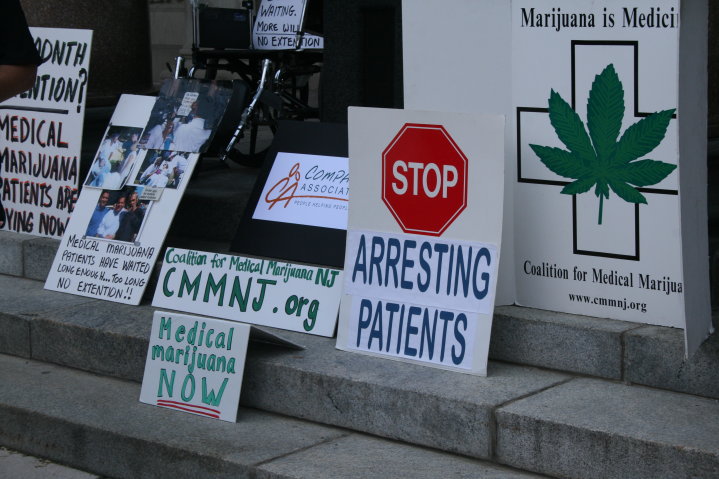
CMMNJ signs

Medical marijuana press conference in Trenton

5/26/2011 – State Senator Nicholas Scutari (D-Linden) introduced SCR 120 today, a resolution that “Urges the Governor to support and advocate for passage of federal ‘Medical Marijuana Patient Protection Act.’” The move in Trenton comes just one day after the federal legislation was re-introduced in Congress.

The bi-partisan co-sponsors of the federal bill issued a press release on May 25th describing the intent:

The States’ Medical Marijuana Patient Protection Act, authored by Frank and co-sponsored by Stark, Polis and Rohrabacher, would make individuals and entities immune to federal prosecution when acting in compliance with state medical marijuana laws. It would also direct the administration to initiate the process of rescheduling marijuana under the Controlled Substances Act so that it is placed in a schedule other than Schedules I or II.

“The time has come for the federal government to stop preempting states’ medical marijuana laws,” Frank said. “For the federal government to come in and supersede state law is a real mistake for those in pain for whom nothing else seems to work. This bill would block the federal prosecution of those patients who reside in those states that allow medical marijuana”

If passed, the federal legislation would directly benefit New Jersey’s residents who are still waiting for the stalled medical marijuana program to get running. The state is currently waiting for clarification from the US Department of Justice.

SCR 120 has been referred to the Senate Health, Human Services and Senior Citizens Committee.

Individual citizens can support the federal bill by sending emails here.

Chris Goldstein is a respected marijuana reform advocate. As a writer and radio broadcaster he has been covering cannabis news for over a decade. Questions?  [email protected]
New Hampshire: Medical marijuana bill passes key vote

photo by C. David Freitag

Remember that School House Rock segment on how a bill becomes a law? Just put that on repeat. A House committee in New Hampshire approved legislation this week to legalize medical marijuana. This is an important step as bills often need to be heard by several committees before they can pass all-important floor votes.

But New Hampshire had a similar bill run this gauntlet just two years ago. Medical marijuana legislation passed in 2009 only to be vetoed by Governor John Lynch.

The resulting attempt by the General Court to overturn the veto missed by just two votes in the state Senate.

Advocates on the ground were buoyed by the 14-3 vote on the House Health, Human Services and Elderly Affairs Committee who recommended that House Bill 442 be passed on the floor.

Polling shows that public support for medical marijuana in New Hampshire runs above 70%.

New England voters are demonstrating a visible groundswell of support for changing local cannabis laws.  Connecticut: Public backs marijuana reforms

Grassroots information: http://nhcommonsense.org/

New Jersey MS Patient Appeals Marijuana Cultivation to State Supreme Court

Attorney Bill Buckman at the PhillyNORML Freedom Forum 2009

8/16/2011 – Criminal defense attorney William Buckman of Moorestown, NJ has filed an appeal to the state’s highest court for John Ray Wilson. The 38 year old man was convicted on the second-degree felony of “manufacturing” marijuana for growing seventeen cannabis plants.  Last month an appellate court upheld Wilson’s 5-year prison sentence, saying that he could not claim that the plants were for “personal” use.

John Wilson lives without healthcare and battles the symptoms of multiple sclerosis. His conviction in January 2010 came just as the Garden State’s compassionate use law was passed. However, it was the first medical marijuana law in the country that continues to prohibit home cultivation.

In a press release today Buckman said, “New Jersey already has some of the most draconian laws in the nation with respect to marijuana, costing taxpayers outrageous sums to incarcerate nonviolent, otherwise responsible individuals- as well as in this case — the sick and infirm.”

Local cannabis advocates have supported John, demonstrating in front of the Somerset County Courthouse throughout his trial.

Ken Wolski, the Executive Director of the Coalition for Medical Marijuana New Jersey said, “This case has shocked the conscience of the community. Wilson was unable to present his only defense to the jury-that he used cannabis to treat his multiple sclerosis (MS).”

NJ Governor Chris Christie lifted his suspension of the medical marijuana program in July. But the six Alternative Treatment Centers are not likely to open until 2012. The ATCs have millions of dollars in backing from powerful groups of investors.  They will farm thousands of cannabis plants and the sell the products to registered patients, including those with MS.

Wolski pointed out, “These ATCs were not available to John in 2008. Cultivation was the only way that he could afford to gain access. We hope that the Supreme Court will provide justice in this case.”

During his trial, Wilson testified that he told the NJ State Police that he was going to keep all of the marijuana. Wilson also described his medical condition to officers as they searched his home.

Bill Buckman is a member of the national NORML Legal Committee and the immediate past president of the NJ Association of Criminal Defense Lawyers. He is a fierce trial lawyer who won a landmark case against the NJ State Police surrounding the the issue of racial profiling in traffic stops.

“As it stands, the case now allows a person who grows marijuana to be exposed to up to 20 years in jail, even if that marijuana is strictly for his or her own medical use,” said Buckman, “No fair reading of the law would ever sanction this result.”

William Buckman http://www.whbuckman.com

Chris Goldstein is a respected marijuana reform advocate. As a writer and radio broadcaster he has been covering cannabis news for over a decade. Questions?  [email protected]

Medical Marijuana Activists Set to Destroy DEA Ruling

2/16/2012 – Activists are preparing to gather at the Federal building in Trenton today to destroy a Drug Enforcement Administration (DEA) ruling as part of a national medical marijuana protest. Members of NORML-NJ and The Coalition for Medical Marijuana New Jersey will shred a copy of The Federal Register Vol. 76 No.131 dated July 8, 2011. The document contains the DEA’s most recent denial of a petition to reschedule marijuana.

Thursday’s protest is organized by Americans for Safe Access and is taking place in cities across the country. Portland, Maine is another East Coast city participating in the “Rally for Safe Access.”

The Schedule I status under the federal Controlled Substances Act of 1970 is the reason that marijuana is prohibited. Schedule I drugs are described as having “no currently accepted medical use in treatment in the United States;” and lack “accepted safety for use under medical supervision;” and, have “a high potential for abuse.”

In the past 40 years voluminous criminal code has since been created at the federal and state level to enforce the Schedule I prohibition of cannabis. Suffering the worst part of this continued effort are seriously ill Americans. They live in fear of losing their lives not just to their disease, but to prison because they find relief from a medication that remains illegal.

Advocacy groups including NORML and MAPS petitioned the DEA for many years seeking to move cannabis to another schedule. The most recent denial last summer culminated a process that the DEA under several presidents, obfuscated for more than a decade.

There are two important factors in the re-scheduling debate. The first is a 1972 report entitled “Marijuana, A Signal of Misunderstanding.” Commissioned by President Nixon and Congress it was crafted by former Pennsylvania Governor Raymond Shafer who lead a group that spent almost two years on the issue. Their final recommendation was that cannabis should not be regulated under the CSA or prohibited with criminal laws.

“The actual and potential harm of use of the drug is not great enough to justify intrusion by the criminal law into private behavior, a step which our society takes only ‘with the greatest reluctance.”

The second important factor is a ruling from an Administrative Law Judge within the DEA. In 1986 Francis L. Young said that “Marijuana is one of “one of the safest therapeutically active substances known to man. (T)he provisions of the (Controlled Substances) Act permit and require the transfer of marijuana from Schedule I to Schedule II.”

In ’72 and again in ’86 the Executive Branch tossed aside serious and well-thought recommendations about cannabis policy. Instead of considering solid information millions of Americans have been arrested, trillions of tax dollars spent and untold lives lost or ruined.

Modern science that investigates the natural plant and its component cannabinoids continues to re-verify the tremendous medical benefits of cannabis. The reality is that marijuana is used as a medicine every day by millions of seriously ill Americans – legal or not. That’s why medical marijuana activists say the DEA ruling is good for nothing but shredding and recycling.

More on the ASA rally locations: http://americansforsafeaccess.org/article.php?id=7062

More the CMMNJ Trenton action: http://cmmnj.blogspot.com

Chris Goldstein is a respected marijuana reform advocate. As a writer and radio broadcaster he has been covering cannabis news for over a decade. Questions?  [email protected]
Medical Marijuana Bill Re-Introduced in Pennsylvania

A bill to legalize the use of marijuana for qualifying medical patients and create a system of “Compassion Centers” has been introduced in the Keystone State. Senate Bill 1003 was brought forward on April 25th by Senator Daylin Leach with Senators Larry Farnese, James Ferlo and Wayne Fontana as the initial co-sponsors. The bill has been referred to the Senate Public Health and Welfare Committee.  READ SB 1003

The language is essentially a re-introduction of legislation from 2009-10 that was active in both houses of the General Assembly. The bill includes provisions for home cultivation and collects the state sales tax on medical cannabis. Last year the issue saw impressive public hearings in Harrisburg and Pittsburgh before the House Health and Human Services Committee.  Seriously ill residents, religious leaders, cannabis advocates, doctors and nurses spoke in favor of the measure but the the bill never got a vote.

Dr. Harry Swidler, an Emergency Medicine physician said at the hearings: “Marijuana is non-addicting. There is no physical dependence or physical withdrawal associated with its use. It is, from a practical standpoint, non-toxic. Marijuana is safer by some measures than any other drug. There is simply no known quantity of marijuana capable of killing a person.”

WATCH VIDEO OF TESTIMONY HERE

Advocates at Pennsylvanians for Medical Marijuana PA4MMJ (this author sits on the Board at PA4MMJ) are pushing for several changes to the bill when it gets to committee this session. These include re-naming the bill to The Governor Raymond P. Shafer Compassionate Use Medical Marijuana Act.

In 1970, just after stepping down as governor in Pennsylvania, Shafer chaired a blue-ribbon commission for President Nixon that recommended two main points: 1) Marijuana should not be placed in Schedule I of the federal Controlled Substances Act 2) Marijuana possession should be decriminalized at the federal level. Nixon ignored those suggestions and ever since the federal government has aggressively enforced the Schedule I classification that describes cannabis as having “…no currently accepted medical use in treatment …” This is the reason that states independently legalize marijuana for medical uses.

Polling conducted by Franklin&Marshall  in 2010 showed that a striking 80 percent of residents support passing a medical marijuana law in Pennsylvania.

Visit www.pa4mmj.org to contact state officials.

Medical marijuana bills in DE, MD follow strict New Jersey law

CMMNJ signs

Medical marijuana press conference in Trenton

Delaware and Maryland recently introduced medical cannabis bills that follow some of limitations in New Jersey’s compassionate use law. The DE/MD bills offer potential medical marijuana patients low amounts of cannabis per month, restricted strains and no provisions for home cultivation. Still, in a refreshing move, the DE bill outlines some of it’s own shortcomings right in the synopsis:

Patients would be allowed to possess up to 6 ounces for their medical use. Six ounces is less than the federal government has determined is a one-month supply for patients in the Compassionate Investigational New Drug Program. READ FULL

New Jersey’s law offers minimal access to cannabis. A short list of very serious medical conditions qualifies like MS, AIDS and Crohn’s Disease. NJ Patients are allowed just two (2) ounces of marijuana each month.Governor Chris Christie has delayed the implementation of the law several times. Christie’s administration has offered regulations that would limit cultivation to three strains of marijuana all less than 10% THC.This has caused a fight with the NJ Legislature who passed resolutions last month to invalidate the proposed regulations. So far no medical marijuana has been grown (legally) for any New Jersey residents.The efforts in Delaware and Maryland recently got a big boost with the support of the Marijuana Policy Project and celebrity Montel Williams. A multiple sclerosis patient, Montel traveled to both states to share his personal story of using therapeutic marijuana at the bill’s introductions.

Medical Marijuana Clinic says Cannabis Effective for Many Women’s Issues

A San Francisco clinic states what many women already know: pot is quite effective in treating cramps, PMS and other menstrual issues as well as helping women with eating disorders:

Many women come to Greenway Medical Marijuana Physician Evaluations seeking help with ailments that only or primarily affect women, such as eating disorders, menstrual cramps, premenstrual syndrome (PMS), mood swings and menopause. The San Francisco medical marijuana doctors at Greenway Medical Marijuana Physicians Evaluations know that properly administered medical marijuana can provide relief, and they are seeing an increase in female patients.

Women who have developed eating disorders such as anorexia nervosa may find relief in the use of certain medicinal cannabis strains that aid relaxation, alleviate anxiety and stimulate the appetite. The naturally occurring marijuana compound tetrahydrocannabinol (THC) is known for improving desire for food and thereby helping patients gain weight. Strains high in THC are more likely to stimulate the appetite.

For many women, monthly menstrual cycles include cramping, and they can also include nausea and backaches. Cannabis is prescribed for cancer patients specifically because it helps target pain and nausea, so it follows that it would also be a good herbal remedy for cramps. Medicinal marijuana also has many secondary, non-psychological effects on the body, including the relaxation of smooth muscles that may be causing the cramps. Indica strains would be beneficial both prior and during the cycle.

Marijuana laws in Pennsylvania should be eased, former public defender says

Joe is a 20-year-old straight-A college student from Lebanon County who was never in trouble with the law until October.Now he worries about a prospective employer going online and finding that Joe pleaded guilty to disorderly conduct, a charge that makes it sound like he is prone to fighting.

Photo: The Associated Press

Joe wasn’t busted for fighting. He was arrested for being in the same car as someone who police caught with a small amount of marijuana.Officials in Lackawanna County, where Joe was arrested, said he could avoid a license suspension and drug conviction by pleading guilty to disorderly conduct. They also said Joe could keep his record clean by completing substance abuse classes and counseling, a process known as Accelerated Rehabilitation Disposition or ARD.Joe said he didn’t have $1,500 the courts wanted for ARD, so he pleaded guilty to disorderly conduct.“What they didn’t tell me and what I didn’t learn is that engaging in fighting is the tag that goes with every disorderly conduct charge. That’s the opposite of me. I’ve never fought. It is just an incredibly inaccurate depiction of who I am,” Joe said.Joe asked that his real name not be used. He worries knowledge of his pot bust could hurt his chances to get a job.People shouldn’t have to choose between the lesser of two evils for getting arrested for a small amount of marijuana, said Cumberland County Public Defender Taylor Andrews, who retired recently after 34 years.Andrews said Pennsylvania should follow states like California, Massachusetts and New York that have decriminalized possession of a small amount of pot — about an ounce or less — to the equivalent of a traffic ticket.“That strikes me as a sane response,” said Andrews. “There are people who have used marijuana and it has not affected their careers and their lives. It becomes almost a random thing, if they are caught and prosecuted, then their lives are significantly affected, where the prosecution has a greater affect than the actual drug.”But don’t look for any easing of Pennsylvania’s pot laws, despite others states’ steps toward making it legal to smoke and grow marijuana.Andrews emphasized he favors relaxing the law only for adults.In November, California voters rejected Proposition 19, which would have allowed people over 21 to grow and possess marijuana and for municipalities to collect taxes on retail sales of pot. Proposition 19 lost by only 53 percent to 46 percent and supporters vow to try again.That Proposition 19 got as far as it did is a game-changer, said Harry Levine, who has studied marijuana arrests as a sociology professor at Queens College and the Graduate Center of the City University of New York.“California is the largest state in the U.S., with 40 million people and the eighth largest economy in the world. By itself that had an enormous effect on the national conversation. It allowed for a more elevated conversation” in the country about decriminalizing marijuana, Levine said.State and local government budget woes could favor relaxing pot laws. Former-Gov. Arnold Schwarzenegger didn’t support Proposition 19, but signed legislation to decriminalize possession of a small amount of marijuana because he agreed with those who said California couldn’t afford devoting court resources to such cases.Andrews said, “It’s a misuse of police time and resources to be focusing a lot on just marijuana possession” when alcohol abuse is the far greater evil.“The biggest slice of the (court) docket are DUI (driving under the influence) cases and most DUI cases are alcohol,” Andrews said. “If you look at your domestic violence cases in virtually 80 percent of them somebody is liquored up. You look in your bad checks, forgery, embezzlement cases, invariably somebody’s life is out of control and often that is correlated with alcohol abuse. Alcohol abuse is the biggest common denominator. It was when I started in the 1970s and it still is.”Public supportPublic support for legalizing pot in Pennsylvania is only 33 percent, but that’s up from 22 percent two years ago, according to a 2010 survey by Franklin & Marshall College.G. Terry Madonna, a political analyst at Franklin & Marshall who co-authored the survey, said he thinks public support would be even higher for reducing the penalty for possession of a small amount of pot, perhaps even to a traffic ticket as in the other states. He said that’s a question the survey hasn’t asked yet but might in light of California’s decision.Madonna said public support was highest — 80 percent — for legislation that would allow marijuana for medicinal use. State lawmakers considered such legislation during the 2009-10 session and Rep. Mark Cohen, D-Philadelphia, plans to re-introduce a medical marijuana bill this year.But medical marijuana and even decriminalizing is a far cry from outright legalization.“We are in a very conservative state culturally,” Madonna said. “We do have a gaming culture. We are far more accepting of the lottery, horse racing and casinos. But we don’t have a drug culture. You are always going to find a segment of the population that will have moral objections” to relaxing pot laws, regardless of any perceived monetary benefit.He said the state budget crunch is forcing the re-evaluation of the cost benefit of strong-on-crime policies popular in the 1990s, such as sentencing guidelines that can lead to prison for people arrested multiple times for having a little pot.But Madonna sees as slim prospects for relaxing pot laws in this state soon, especially since voters just elected a more conservative legislature and governor.Jack Carroll, executive director of Cumberland County Drug and Alcohol Commission, sees no sentiment for legalized marijuana in Pennsylvania, given the state House 198-1 vote this year to ban synthetic marijuana. The ban awaited Senate action.Pot casesMidstate district attorneys don’t see pot cases as an undue burden on courts. They say a first-time offender busted for a small amount of pot usually gets ARD.“We’ve made it as non-criminal as you can possibly make it,” said Cumberland County District Attorney David Freed.The district attorneys don’t support decriminalizing pot. They see marijuana as leading to abuse of more serious drugs like heroin and cocaine. The prosecutors also worry relaxing pot laws will cause more people to use it.Perry County District Attorney Charles Chenot said “I’ve seen what smoking pot can do to a person. It really truly is a mind-altering substance. It influences your ability to drive, walk and reason. It is a substance that leads to other drugs. By decriminalizing we are kind of giving up on our war on drugs.”PossessionDauphin is the only midstate county where the number of cases filed in court for people arrested for having a small amount of marijuana exceedsed the number of DUI cases from 2005 to 2009, according to data provided by the Administrative Office of Pennsylvania Courts. Dauphin’s pot cases in recent years even exceed those of York County, which has larger population than Dauphin.Dauphin County District Attorney Edward M. Marsico Jr. said a lot of the small pot possession cases come from people who are arrested at concerts in Hersheypark.Otherwise, Marsico said many of the small pot arrests are accompanied by other charges. Often, people who are already on supervised probation for other offenses get caught with marijuana, as do individuals police stop on the street for suspicious behavior, Marsico said.In June, Philadelphia created a diversion court where anyone arrested with up to 30 grams of pot would pay a fine. The city said the program would divert more than 4,700 possession cases from its criminal courts.Marsico said he is watching Philadelphia to see how its diversion court goes. “The small amount of marijuana alone is not bogging down our court system but it is certainly something we should take a look at going further.”Gov. Tom Corbett while running for governor said he opposed expanding Philadelphia’s pot decriminalization court outside the city. Marsico said he does not believe Dauphin would need state approval to set up a pot diversion court similar to Philadelphia’s.Joe still smokes pot about four times a year.“I do more harm to myself eating bowls of ice cream,” he said. “We all know marijuana is not a healthy thing to do, the same as with cigarettes, fatty foods and alcohol.“In excess all these things are bad for you. But what it comes down to is these are decisions of individuals. As Americans we are allowed to do unhealthy things,” he said.